Choices, Choices, Choices??? – PROVERBS – Chapter 1d – 1:10-19 (b) [7]

You can hold on to the hope that I, The Lord, will not change what I have promised.
Hebrews 6:17-18


So what does Solomon want us to take away from the confusing verses of Proverbs 1:10-19? http://wp.me/p5nZpi-2I
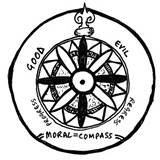
First, Solomon wants to remind and warn us, that sin can be very attractive.  The danger in following unwise choices, vs. the truth, is that they will then become our compass, what directs us in our everyday interactions.
th                     th

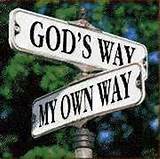
Secondly, acting on sinful choices will not enable us to reach the goals we hope to achieve.  What may look “good” at the onset, may end up trapping us in an unhealthy lifestyle. Solomon warns us not to comprise our values and ignore God’s guidance, following what “man” deems as success.
                                                         th

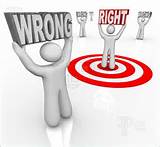
Often times the enticement of promised friendships, the allure of being “part of the group”, moving up in our job, etc. overtakes our better judgment.
th-2                      th-1

Solomon warns not to get caught up in the temptations around us, DON’T follow them. STAY AWAY, verse 15.
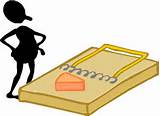
Solomon uses an analogy of a bird in verse 17. A bird, which certainly does not have the intelligence of a person, yet instinctively recognizes a trap and STAYS AWAY.  Sadly, when we choose to venture out into the world “on our own”, without God and His principles, we set an ambush for ourselves; – v.18, which will end tragically.

Lastly, THE KEY is to think beyond the here and now. To consider the future consequences of our present choices.  Short-term choices vs. Long-term effects.  We have free will to make choices, but not the freedom to choose our consequences.

1278164062                                      71e0aff396f2d3cce3fff5c7a6ca7ae4


Come Join Us …. Ummm, Should I? – PROVERBS – Chapter 1c – 1:10-19 (a) – [6]

“Let’s feast and drink, for tomorrow we die!”  Don’t be fooled by those who say such things, for “bad company corrupts good character.”  –  1 Corinthians 15:32-33

10))  My child, IF sinners entice you, THEN
         turn your back on them!
11))  They may say, “Come and join us.
         Let’s hide and kill someone!
         Just for fun, let’s ambush the innocent!
12))  Let’s swallow them alive, like the grave;
         let’s swallow them whole, like those who go down to the pit of death.
13))  Think of the great things we’ll get!
         We’ll fill our houses with all the stuff we take.
14))  Come, throw in your lot with us;
         we’ll all share the loot.”
15))  My child, DON’T go along with them!
         Stay far away from their paths.
16))  They rush to commit evil deeds.
         They hurry to commit murder.
17))  IF a bird sees a trap being set,
        it knows to stay away.
18))  BUT these people set an ambush for themselves;
         they are trying to get themselves killed.
19))  Such is the fate of all who are greedy for money;
         it robs them of life.

Verses 10-19 may seem a bit confusing, even scary.  Since we learned in the introduction of Proverbs that we are to discern and apply the principles of the proverbs to our lives, what then, does Solomon want us to take away from these perplexing verses?

What’s Our Source of Direction, Guidance, and Instruction? – PROVERBS – Chapter 1b – 1:8-9 – [5]

The LORD is my strength and shield. I trust him with all my heart. He helps me, and my heart is filled with joy. I burst out in songs of thanksgiving. – Psalm 28:7


Proverbs 1:8-9

8))  My child, LISTEN when your father corrects you.
       DON’T NEGLECT your mother’s instruction.

9))  WHAT YOU LEARN FROM THEM WILL crown you with grace
    and be a chain of honor around your neck.


Verses 8-9 are pretty straight forward. They remind us that our main “earthly” source of direction, guidance, and instruction is from our parents. Following their “godly” teaching will develop godly character in us. God’s character will be reflected, and noticed by others around us.


I Can Have Wisdom, Knowledge, and Discernment!! – PROVERBS – Chapter 1a – 1:1-7 – [4]

Yours, O LORD, is the greatness and the power and the glory and the majesty and the splendor, for everything in heaven and earth is yours… – 1 Chronicles 29:11

From the first verse in the Book of Proverbs, Solomon is very clear with the reader.  He states in verse 1 that he is the author, he is King of Israel, and why he wrote the Proverbs.

1 These are the proverbs of Solomon, David’s son, king of Israel.

2 Their purpose is to teach people wisdom and discipline,
    to help them understand the insights of the wise.
3 Their purpose is to teach people to live disciplined and successful lives,
    to help them do what is right, just, and fair.
4 These proverbs will give insight to the simple,
    knowledge and discernment to the young.

<Solomon goes on to say what type of people can benefit from the proverbs.>

5 Let the wise listen to these proverbs and become even wiser.
    Let those with understanding receive guidance
6 by exploring the meaning in these proverbs and parables,
    the words of the wise and their riddles.

<Solomon then writes that the foundation, the starting point, what holds everything stable and in place, is the fear of the Lord.  By contrast, fools (a person who is deficient in the intellectual, practical, or moral sense)…>

7 Fear of the Lord is the foundation of true knowledge,
    BUT fools despise wisdom and discipline.

<As we look through the Book of Proverbs let us seek to become wiser, gaining insight and understanding, of God’s ways.  To allow, God’s Word, the ultimate compass, to direct us along life’s path.>

How Does a Principle Differ From a Fact? – PROVERBS – Introduction 3 – [3]

Trust in the LORD forever, for the LORD GOD is an everlasting rock. – Isaiah 16:3

We may think that Proverbs are quick, clever, one-liners, and some of them are.  Designed to help us remember important ideas, they have a cause and effect feel. Pride leads to disgrace, but with humility comes wisdom – Proverbs 11:1 or If you keep your mouth shut, you will stay out of trouble. – Proverbs 21:23

We will read these short sentences throughout much of the Book of Proverbs, except the first nine chapters which are in paragraph form. You will also notice that the proverbs don’t build to any particular thought.  Sometimes you will see from one verse to the next different ideas, and other times you’ll see them relating loosely to the previous or post verse.

The idea behind Proverbs is to understand principles, vs a fact …God is love – 1 John 4:8.  A principle is defined by Merriam Webster as, a moral rule or belief that helps you know what is right and wrong and that influences your actions, a law or fact of nature that explains how something works or why something happens.

The poor plead for mercy; the rich answer with insults. – Proverbs 18:23
Poor can mean financially poor, or people who are confused, seeking, etc. People in these circumstances are often more likely to humble themselves because they don’t see themselves as self-sufficient. The rich, in wealth, education, freedoms, etc. see themselves as self-sufficient.  They don’t “need” from others. Therefore, see no need to humble themselves.

Proverbs are not to be taken as literal translations.  For example, Proverbs 14:1, A wise woman builds her home, but a foolish woman tears it down with her own hands.  This does not mean that a woman is going to literally use her bare hands to pull the shingles off the roof and pull apart the framing of a house.

We will begin reading through the Book of Proverbs, seeking to understand the principles God has given, to help us effectively navigate through life.

Knowledge or Wisdom? – PROVERBS – Introduction 2 – [2]

Fear of the LORD is the foundation of true knowledge, but fools despise wisdom and discipline. – Proverbs 1:7

Humans have something unique that no other creatures possess – the way our minds work.  thinking-person-24255334   Humans have an ability to reason, to analyze, conceptualize, theorize, discuss and debate.  Humans have a built-in desire to learn. This learning and understanding is fostered through schools, universities, and in the home/family.  It is in these environments that people learn about themselves and the world around them.

In the paragraph above, we see human’s desire for knowledge. pile-clipart-book6-233x300

But knowledge is different from wisdom.  Knowledge is having the facts, where wisdom is the ability to apply the facts (knowledge) to our daily life. The word proverb comes from the Hebrew meaning, “to rule or govern”. Proverbs provide advice for directing and ordering our lives.

Solomon has left us with 3 books of wisdom, found in the Bible.  Proverbs, Ecclesiastics, and Song of Songs.

In the Book of Proverbs, Solomon’s advice is given in the form of proverbs, hence the name.  A proverb is a short, concise sentence that conveys moral truth (principles of right and wrong behavior).

Solomon has put together a collection of proverbs, giving the reader practical examples of how to live their lives according to godly wisdom. Their intention is to improve people’s relationship between each other and God.

As we look through the Book of Proverbs – Remember: Don’t just listen to God’s word. You must do what it says. Otherwise, you are only fooling yourselves. – James 1:22

“What Do You Want?” – PROVERBS – Introduction 1 – [1]

In those days Israel had no king; all the people did whatever seemed right in their own eyes.       Judges 21:25

The book of Proverbs in an interesting book tucked in between the Book of Psalms and Ecclesiastes. It is located in the middle of the Bible, in the Old Testament.

It was written and complied by King Solomon, the son of King David, early in his reign as King. Agur and Lemuel also included some proverbs in the later sections.  There are 31 Proverbs. (One could be read each day of the month).

Solomon was King for 40 years, between 836 and 796 BC.  Solomon was considered to be the wisest man who ever lived.  He received his wisdom from God.

3 Solomon loved the Lord and followed all the decrees of his father, David… 5 That night the Lord appeared to Solomon in a dream, and God said, “What do you want? Ask, and I will give it to you!”

7 “Now, O Lord my God, you have made me king instead of my father, David, but I am like a little child who doesn’t know his way around. 8 And here I am in the midst of your own chosen people, a nation so great and numerous they cannot be counted! 9 Give me an understanding heart so that I can govern your people well and know the difference between right and wrong. For who by himself is able to govern this great people of yours?”

10 The Lord was pleased that Solomon had asked for wisdom.11 So God replied, “Because you have asked for wisdom in governing my people with justice and have not asked for a long life or wealth or the death of your enemies— 12 I will give you what you asked for! I will give you a wise and understanding heart such as no one else has had or ever will have! 13 And I will also give you what you did not ask for—riches and fame! No other king in all the world will be compared to you for the rest of your life! 14 And IF you follow me and obey my decrees and my commands as your father, David, did, I will give you a long life.” – 1Kings 3:3,5,7-14

This same wisdom is available to everyone who asks The Lord.  –  If any of you lacks wisdom, you should ask God, who gives generously to all without finding fault, and it will be given to you.     James 1:5

Proverbs was written as a textbook, of sorts.  It’s purpose was/is to teach people how to live godly lives through the repetition of wise thoughts.  It teaches people about right and wrong, justice and fairness, and how to apply divine wisdom and moral instruction to our daily lives.